I know. 92 nutrients sounds ridiculous.
It sounds like the kind of claim you’d see on a late-night infomercial, right between the ab roller and the non-stick cookware that “changes everything.” The number is too round, too big, too convenient. It’s the nutritional equivalent of “doctors hate this one weird trick.”
Your skepticism is not only justified—it’s smart. The supplement industry has trained us to hear these claims and immediately think: scam. And most of the time? That instinct is right. Most “superfoods” are overhyped, overpriced, and underwhelming. Açaí didn’t cure anything. Goji berries didn’t reverse aging. Spirulina didn’t give anyone superhuman energy despite what the 1990s promised.
So when you hear that moringa—a plant you’ve maybe never heard of—contains 92 nutrients, your brain does exactly what it should: it calls bullshit.
Here’s what made me look twice: the research isn’t coming from wellness bloggers or supplement companies trying to move inventory. It’s coming from NASA, Johns Hopkins University, and peer-reviewed agricultural journals that have no financial stake in whether you buy moringa or not. These aren’t testimonials. These are lab analyses, published studies, and nutritional databases that list—nutrient by nutrient—what’s actually in the plant.
And here’s the uncomfortable truth: the number checks out. Not because moringa is magic. Not because it’s a miracle. But because it’s a very specific type of plant that grows in very specific conditions and concentrates an unusually broad range of nutrients in its leaves.
That doesn’t mean it works. That doesn’t mean you should buy it. And it definitely doesn’t mean most moringa products on the market deliver what the research shows. But it does mean the 92-nutrient claim isn’t the lie it sounds like—and understanding why might change how you think about what’s actually missing from your diet.
The Research That Sounds Like Marketing (But Isn’t)
Let’s start with where this number actually comes from, because if you’re going to believe something this improbable, you need to see the receipts.
The most comprehensive nutritional analysis of moringa comes from multiple sources, but the one that gets cited most often is from the Trees for Life organization’s compilation of university research, which pulled data from laboratory analyses conducted at the University of the Philippines, Johns Hopkins University, and several agricultural research centers. [1] These weren’t supplement companies funding studies to sell product. These were universities analyzing the plant as a potential food source for malnutrition intervention.

The breakdown isn’t vague “superfood goodness.” It’s specific: 46 antioxidants, 36 anti-inflammatory compounds, 25 vitamins and minerals, 18 amino acids (including all 9 essential amino acids your body can’t produce on its own), plus omega fatty acids, chlorophyll, and various phytonutrients.[2] Add those categories together, and yes—you get 92.
NASA’s interest in moringa wasn’t about wellness trends. In the 1990s, they were researching potential food sources for long-duration space missions where resupply isn’t an option and every gram of weight matters. [3] They needed plants that could grow quickly, survive in challenging conditions, and deliver broad-spectrum nutrition in a small package. Moringa made the shortlist not because it’s trendy, but because the nutrient density per gram is unusually high compared to other plants they tested.
Here’s what shows up in the actual lab data: 7 times the vitamin C of oranges, 4 times the calcium of milk, 4 times the vitamin A of carrots, 3 times the potassium of bananas, and 2 times the protein of yogurt—all by weight. [4] These aren’t rounded marketing numbers. These are the results you get when you put dried moringa leaf powder through the same nutritional analysis you’d use for any other food.
The studies aren’t recent hype, either. Agricultural research on moringa goes back to the 1980s, when international aid organizations were looking for fast-growing plants that could address malnutrition in developing countries. The nutritional profile has been documented in peer-reviewed journals like the Journal of Food Science and Technology, Phytotherapy Research, and the Asian Pacific Journal of Cancer Prevention. [5] You can find these studies yourself by searching “moringa oleifera nutritional analysis” in PubMed or Google Scholar—the database names and nutrient breakdowns are all there, published and public.
What makes this different from typical “superfood” claims is the specificity. Most wellness products cite one or two studies that show some benefit in mice, then extrapolate wildly. The moringa research is extensive, replicated across multiple labs, and focused on basic nutritional content rather than miraculous health outcomes. They’re not claiming it cures anything. They’re just counting what’s in it—and the count is legitimately unusual.
The reason this matters: most women over 45 are dealing with some level of micronutrient deficiency, not because they’re eating poorly, but because nutrient absorption declines with age and modern soil depletion means even “healthy” food contains less than it used to.[6] Magnesium, B vitamins, vitamin D, iron—these gaps are common, hard to detect on standard blood work, and contribute to that persistent low-grade fatigue that doctors can’t explain. A plant that delivers broad-spectrum micronutrients in one concentrated source isn’t magic. It’s just efficient.
That said—and this is critical—most moringa products on the market don’t deliver what the research shows, and we’ll get to why in a minute. But the foundational claim, the 92 nutrients, isn’t the scam it sounds like. The scam is what most companies do after that claim.
Why You’re Right to Be Skeptical
Your skepticism about the 92-nutrient claim isn’t paranoia—it’s pattern recognition from years of watching the supplement industry lie.

Let’s be clear about what the wellness industry does with research. They find one legitimate study—often conducted in a petri dish or on rats—and they scale it up to impossible human outcomes. They take a finding like “antioxidant compounds were present in lab analysis” and turn it into “reverses aging and prevents disease.” They ignore dosing, they ignore duration, and they definitely ignore the part where the researchers said “more study is needed before drawing conclusions.”
You’ve seen this play out with every “superfood” trend of the past 20 years. Açaí berries were supposed to melt fat and boost energy—until people realized they were just expensive berries with antioxidants you could get from blueberries. Spirulina was marketed as a complete protein source that would solve malnutrition—except it tastes like pond scum and most people can’t stomach enough of it to matter. Turmeric became a cure-all anti-inflammatory—then research showed that curcumin (the active compound) has terrible bioavailability unless paired with black pepper, and most supplements don’t bother with proper formulation.
The pattern is always the same: take real research, strip away all context and caveats, add testimonials from people who “feel amazing,” and sell it as the one thing everyone’s been missing.
Moringa gets the same treatment. Wellness influencers post about it like it’s liquid energy. Supplement companies slap “92 nutrients!” on labels next to pictures of glowing women doing yoga at sunrise. The marketing makes it sound like you’ll drink a smoothie and immediately feel 20 years younger.
That’s garbage, and you know it’s garbage, which is why your default response to “92 nutrients” is to assume the entire thing is fake.
Here’s what’s actually happening: the nutritional content is real and verifiable in lab analysis. The NASA research is real. The university studies are real. But the implications of that research get twisted into marketing claims that have nothing to do with what the studies actually showed. The research says: “This plant contains an unusually diverse nutrient profile.” The marketing says: “This plant is the answer to all your health problems.” Those are not the same statement.
The companies selling moringa—especially the cheap, unverified products flooding the market—don’t care about the research. They care about the claim. They know “92 nutrients” sounds impressive, so they plaster it everywhere, regardless of whether their specific product actually delivers those nutrients in bioavailable forms or at meaningful doses. They’re counting on you not checking, not digging deeper, not asking whether their moringa was tested for contamination or whether it was stored properly or whether the dose is anywhere near what the research used.
Your skepticism is the only thing protecting you from wasting money on products that use real research as a marketing hook but deliver nothing close to what the studies showed. The 92-nutrient claim is legitimate. Most products using that claim are not.
The Catches That Make It Believable
If moringa were actually the miracle it gets marketed as, everyone would already be using it. The fact that it’s not mainstream—despite decades of research—tells you something important: it comes with trade-offs.
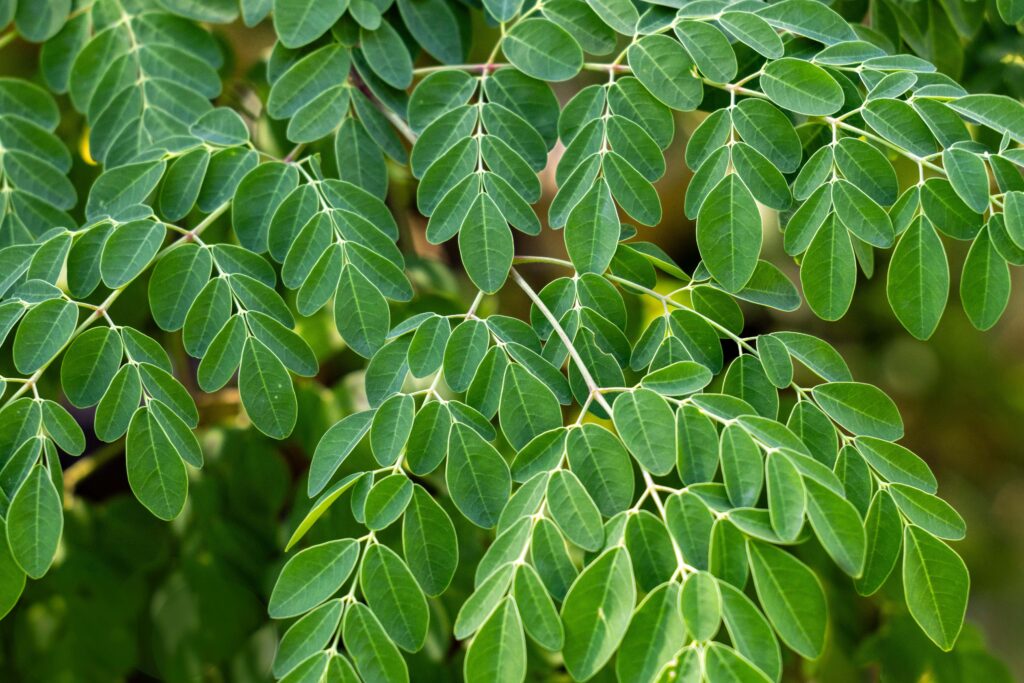
First: it tastes like you’re drinking a lawn.
Fresh moringa leaf powder has a strong, earthy, slightly bitter, grassy flavor that most people describe as somewhere between matcha and… sadness. It’s not pleasant. You can mask it in smoothies with bananas and berries and almond butter, but you’re still going to taste it. Some people get used to it. Some people never do. If you’re expecting a delicious “superfood latte” experience, you’re going to be disappointed immediately. This isn’t a treat. It’s plant medicine that tastes like plant medicine.
The unpleasant taste is actually a quality marker—if your moringa tastes mild and inoffensive, it’s probably been processed in a way that destroyed some of the beneficial compounds, or it’s old and oxidized, or it’s been cut with fillers. Good moringa tastes green.
Second: the timeline is measured in weeks, not days.
Most people trying moringa give it three days, feel nothing, and decide it doesn’t work. But the research showing benefits—particularly for blood sugar stabilization and energy—used timeframes of 8 to 12 weeks. [7] The compounds in moringa don’t deliver a caffeine-style jolt. They’re working at the level of cellular metabolism, nutrient repletion, and gradual inflammation reduction. That takes time.
If you’re looking for instant energy, moringa isn’t your answer. If you’re willing to give something 6 to 8 weeks to see whether your afternoon energy crashes start to level out, that’s a different conversation.
Third: quality moringa is expensive.
Cheap moringa is everywhere—$10 for a massive bag on Amazon. But cheap moringa is also usually contaminated with heavy metals (it’s a bioaccumulator, meaning it pulls toxins from soil), grown in industrial conditions with pesticide residue, or stored improperly so the nutrients degrade. The brands that actually third-party test for purity, source from controlled farms, and handle the product correctly? They charge more, because that process costs more.
You’re not going to find research-grade moringa at bargain prices. The trade-off for broad-spectrum nutrition is paying for verification that you’re getting broad-spectrum nutrition and not broad-spectrum contamination.
Fourth: it doesn’t fix everything.
The 92-nutrient profile means moringa can fill micronutrient gaps—magnesium, B vitamins, iron, antioxidants—that contribute to low energy and metabolic dysfunction. But it’s not going to fix a thyroid problem. It’s not going to reverse insulin resistance on its own. It’s not going to cure chronic fatigue if the root cause is sleep apnea or an autoimmune condition.
What moringa does—and this is backed by research—is stabilize blood sugar through compounds called isothiocyanates that improve insulin sensitivity, and provide raw materials (vitamins, minerals, amino acids) that your cells need to produce energy efficiently. [8] If your fatigue is rooted in micronutrient deficiency or blood sugar instability, moringa is worth trying. If it’s rooted in something else, moringa is just expensive lawn clippings.
Fifth: most products don’t deliver what the research shows.
This is the biggest catch. The studies showing benefits used specific doses (typically 1,500 to 3,000mg of dried leaf powder per day) from verified, contaminant-free sources. [9] Most moringa supplements on the market contain 400 to 500mg per capsule, recommend one capsule daily, and don’t test for heavy metals or pesticides. That’s not clinical dosing. That’s marketing dosing—just enough to make the claim, not enough to matter.
The gap between “moringa research shows benefits” and “this specific moringa product will help you” is enormous, and most companies are counting on you not noticing the difference.
These catches—the taste, the timeline, the cost, the limitations, the quality gap—are what make the 92-nutrient claim believable. If moringa were easy, delicious, instant, cheap, and universally effective, it would be a scam. The fact that it requires trade-offs, patience, investment, and realistic expectations is what separates it from infomercial nonsense.
What 92 Nutrients Actually Means for Your Body
Let’s talk about what “92 nutrients” actually does—and doesn’t—mean for a woman in her late 40s or 50s dealing with fatigue that her doctor can’t explain.

It doesn’t mean moringa is magic. It means it’s broad-spectrum support at a time when your body’s ability to extract and utilize nutrients from food is quietly declining. Stomach acid production drops with age. Digestive enzymes become less efficient. Nutrient absorption in the gut lining decreases. Even if you’re eating well—vegetables, protein, whole grains, all the things you’re supposed to do—your body may not be pulling out the micronutrients it needs the way it did 10 years ago. [10]
The result is subtle, chronic deficiency that doesn’t show up on standard blood work but absolutely shows up in how you feel. Low magnesium contributes to muscle tension, poor sleep, and anxiety. Low B vitamins affect energy production at the cellular level—your mitochondria (the tiny power plants inside your cells) need B vitamins to convert food into usable energy. Low vitamin C impairs your body’s ability to manage oxidative stress. Low iron means your red blood cells can’t carry oxygen efficiently, leaving you breathless and exhausted.
Most women over 45 are dealing with some combination of these gaps, not because they’re nutritionally neglectful, but because modern soil is depleted (meaning vegetables contain fewer nutrients than they did 50 years ago), stress burns through B vitamins and magnesium faster than normal, and perimenopause hormonal shifts change how your body processes and stores nutrients.[11]
Moringa doesn’t fix deficiencies overnight, but it provides raw materials—vitamins, minerals, amino acids, antioxidants—in forms your body can use. The 18 amino acids include the 9 essential ones your body can’t make on its own, which matters if you’re not getting enough protein or if your digestion isn’t breaking down protein efficiently. The 25 vitamins and minerals cover most of the common deficiencies in women over 45. The 46 antioxidants help manage the oxidative stress that contributes to inflammation and cellular aging.
The most noticeable effect, based on research, is blood sugar stabilization. Moringa contains compounds called isothiocyanates that improve insulin sensitivity—meaning your cells respond better to insulin and pull glucose out of your bloodstream more efficiently.[12] For women dealing with that 3 PM crash where energy disappears and sugar cravings hit hard, this is the mechanism that matters. It’s not stimulating energy. It’s preventing the blood sugar spike-and-crash cycle that makes you feel like you’re on a metabolic roller coaster.
If you recognize this pattern: Fine until mid-afternoon, then exhausted and desperate for something sweet. After you eat, you get a brief lift, then crash even harder. By evening, you’re too tired to function—this is blood sugar instability, and it’s one of the most common energy drains in women over 45.
What 92 nutrients doesn’t mean: it won’t replace a varied diet. It won’t cure diseases. It won’t override poor sleep, chronic stress, or underlying medical conditions. It’s not a shortcut around foundational health habits.
What it does mean: if you’re doing everything “right” but still feel like something’s missing—if your energy is flat, your recovery is slow, your mental clarity is gone—there’s a decent chance you’re dealing with micronutrient gaps that standard multivitamins (which often use cheap, poorly absorbed forms of nutrients) aren’t filling. Moringa’s broad nutritional profile means it can address multiple deficiencies at once, which is more efficient than trying to identify and supplement each nutrient individually.
The research supporting this isn’t miraculous. It’s mundane: when people with nutrient deficiencies take a concentrated, bioavailable source of those nutrients over 8 to 12 weeks, their lab markers improve and their symptoms decrease. [13] That’s not magic. That’s just giving your body what it’s been missing.
The catch—again—is that most moringa products don’t deliver this. You need proper dosing (1,500mg minimum, 3,000mg is better), you need third-party testing to confirm it’s not contaminated, and you need patience to let it work. Most people don’t get all three, which is why moringa has a reputation for being overhyped.
The One Product That Delivers What Research Shows
If you’ve read this far and you’re thinking, “Okay, maybe moringa isn’t complete nonsense, but how do I know I’m not buying contaminated lawn clippings at a 5,000% markup?”—that’s the right question.

Most moringa fails at one of three points: contamination, dosing, or bioavailability. The cheap products flooding Amazon and health food stores are almost never third-party tested, which means you have no idea whether you’re getting heavy metals, pesticides, or mold along with your “92 nutrients.” Even if the moringa itself is clean, many products use doses so low (400mg per serving) that you’d need to take 6 to 8 capsules daily to hit research-backed levels—and at that point, the cost per dose makes it prohibitively expensive anyway.
Moringa Magic is one of the few moringa products that actually delivers what the research shows, which is why it’s worth mentioning specifically.
First: it’s third-party tested for heavy metals, pesticides, and microbial contamination. You’re not gambling on whether you’re slowly poisoning yourself while trying to feel better. This matters more with moringa than with most supplements because moringa is a bioaccumulator—it pulls whatever’s in the soil into its leaves, including lead, cadmium, and arsenic if the soil is contaminated. Testing isn’t optional. It’s the difference between a nutrient-dense supplement and a toxic one.
Second: the dose is 800mg per serving—the lower end of research-backed dosing, but still significantly higher than the 400 to 500mg most products offer. That means you’re taking 2 to 3 capsules daily instead of 6 to 8, which makes it both more convenient and more cost-effective. If you need a higher dose (some people find 3,000mg works better for blood sugar stabilization), you can scale up without taking a handful of pills.
Third: the sourcing is traceable. The moringa comes from farms in regions known for optimal growing conditions—tropical climates with mineral-rich soil and controlled agricultural practices. This isn’t moringa scraped together from wherever it’s cheapest. It’s grown specifically for nutritional content and purity, which shows up in the final product quality.
Here’s what to expect if you try it: nothing for the first week or two. Moringa is not a stimulant. You will not feel a jolt of energy 30 minutes after taking it. What you’re looking for is the absence of crashes—the afternoon slump that used to hit at 2 or 3 PM starts coming later, or doesn’t come as hard. The sugar cravings that used to feel desperate start feeling manageable. Your baseline energy feels steadier, less volatile.
By week 6 to 8, if moringa is addressing a real deficiency for you, the change is more obvious. You wake up less exhausted. You don’t need to nap. You can make it through the day without feeling like you’re dragging yourself through quicksand. Your brain fog lifts—not dramatically, not overnight, but noticeably. This is what the research timeline shows, and this is what realistic expectations look like.[14]
If you’re dealing with blood sugar instability specifically—the 3 PM crashes, the post-meal exhaustion, the desperate need for sugar—the timeline can be faster. Some women notice stabilization within 3 to 4 weeks. But even then, it’s subtle. You’re not looking for a miracle. You’re looking for the elimination of a problem that’s been quietly draining you.
Serenis Naturals earns a commission when you purchase through our links, at no extra cost to you. We only recommend products that meet documented quality standards.
What moringa won’t fix: thyroid dysfunction, severe insulin resistance, sleep apnea, chronic infections, autoimmune conditions. If your fatigue is rooted in one of those, moringa might help at the margins (better nutrient status supports overall function), but it’s not going to be the primary solution.
What it might fix: micronutrient deficiencies that standard blood work doesn’t catch, blood sugar instability that contributes to energy crashes, oxidative stress and inflammation from inadequate antioxidant intake, and the cumulative drain of multiple small nutritional gaps that add up to chronic low energy.
The trade-off is this: Moringa Magic is more expensive than the cheap moringa you’ll find elsewhere. But cheap moringa that doesn’t work costs more in the long run—because you’re still exhausted, you’re still searching for answers, and you’re still spending money on things that don’t deliver. Quality isn’t a luxury when you’re trying to solve a real problem. It’s the baseline requirement for not wasting your time.
The Most Asked Questions
It’s verified through lab analysis, but it requires some context. The number comes from adding together multiple categories: vitamins, minerals, amino acids, antioxidants, anti-inflammatory compounds, and phytonutrients. These have been documented in peer-reviewed studies from universities including Johns Hopkins and agricultural research centers. You can verify this yourself by searching “moringa oleifera nutritional profile” in PubMed or Google Scholar. The catch is that not all 92 compounds are present in high amounts—some are trace elements—and the research focuses on the most impactful nutrients (vitamins A and C, calcium, iron, amino acids) rather than claiming all 92 deliver major benefits.
It depends entirely on what’s causing your fatigue. If you’re dealing with micronutrient deficiencies (magnesium, B vitamins, iron) or blood sugar instability, moringa’s broad nutritional profile and insulin-sensitizing compounds can make a noticeable difference over 8 to 12 weeks. If your fatigue is rooted in thyroid dysfunction, sleep apnea, or chronic stress, moringa won’t fix the underlying problem—it might help at the margins, but it’s not the primary solution. The gut-energy-hormone connection often plays a bigger role than any single supplement.
Research showing benefits used doses between 1,500mg and 3,000mg of dried moringa leaf powder daily, taken consistently for at least 8 weeks. Most moringa products contain 400 to 500mg per capsule and recommend one capsule daily—that’s nowhere near research-backed dosing. You need either a higher-dose product or you need to take multiple capsules to hit clinical levels. Anything less is marketing dosing, not functional dosing.
A few reasons: it tastes terrible (strong, grassy, bitter), it’s not native to Western countries (so it’s not part of traditional diets), the benefits take weeks to show up (modern consumers expect instant results), and quality sourcing is expensive (cheap moringa is often contaminated). Also, pharmaceutical companies don’t profit from plants you can grow yourself, so there’s no massive marketing push. The research exists, but it’s mostly in agricultural and nutrition journals, not consumer-facing media.
Moringa has mild blood-sugar-lowering effects, so if you’re on diabetes medications, you need to monitor your glucose levels and work with your doctor to adjust dosing—moringa could potentially enhance the medication’s effect. If you’re on thyroid medication, there’s some theoretical concern about interactions (moringa contains compounds that may affect thyroid function), though research is limited. For details on moringa and thyroid medication safety, there’s a breakdown of what’s known and what to watch for. If you’re on blood thinners, blood pressure medications, or immunosuppressants, check with your doctor before adding moringa.
Look for third-party testing certifications—specifically for heavy metals (lead, cadmium, arsenic), pesticides, and microbial contamination. Moringa is a bioaccumulator, meaning it pulls toxins from soil into its leaves, so testing isn’t optional. Check that the dose per serving is at least 1,500mg (not 400 to 500mg). Verify the sourcing region—moringa grown in tropical areas with controlled agricultural practices is more likely to be clean. Avoid products that don’t list where the moringa was grown or don’t provide testing documentation. For a deeper look at how to verify supplement quality, the supplement contamination and third-party testing breakdown covers what each certification actually means.
Most multivitamins use cheap, poorly absorbed forms of nutrients and contain doses that are too low to address real deficiencies. Moringa provides nutrients in whole-food form, which often means better bioavailability (your body can actually use them). That said, moringa isn’t a complete replacement for a multivitamin—it’s lower in some nutrients (like vitamin D and B12) and higher in others (vitamin A, calcium, iron). If you’re dealing with persistent fatigue despite taking a multivitamin, the issue might be absorption, not intake—and that’s where whole-food sources like moringa or gut repair strategies can make a difference.
Explore More:
If your thyroid labs came back “normal” but you’re still exhausted, cold, and foggy: Why Normal Thyroid Labs Don’t Mean Optimal—the gap between disease diagnosis and functional optimization, and why your TSH sitting at 3.5 might be the problem your doctor dismissed.
If you’ve tried energy supplements before and they either did nothing or made you feel worse: Why Energy Supplements Didn’t Work (And What Actually Might)—the six failure points that explain why most supplements fail, and the three patterns that actually respond to targeted support.
If you’re dealing with bloating, food sensitivities, or brain fog that gets worse after eating: The Gut-Energy-Hormone Triangle—why your energy problem might actually be a gut problem, and how inflammation in your digestive system drains energy before you even realize it’s happening.
If you’re wondering whether moringa might interfere with your thyroid medication: Moringa and Thyroid Medication Safety—what the limited research shows, what doctors recommend watching for, and whether combining them is worth the risk.
If you suspect blood sugar instability but your fasting glucose came back “normal”: Blood Sugar Guide: When Fasting Glucose is Normal But You’re Still Tired—the complete panel your doctor probably didn’t order, and why normal fasting glucose doesn’t rule out insulin resistance or reactive hypoglycemia.
If you’re trying to figure out which supplement actually matches your specific energy pattern: The Energy Detective Guide walks you through the assessment. It won’t tell you moringa is the answer for everyone—it’ll help you identify whether blood sugar instability, thyroid dysfunction, gut issues, iron deficiency, or adrenal dysregulation is the pattern you’re actually dealing with, so you stop guessing and start targeting the right problem.
References
- Fuglie, L. J. (2001). The Miracle Tree: Moringa oleifera – Natural Nutrition for the Tropics. Training Manual, Church World Service, Dakar, Senegal.
- Women taking metformin or any blood sugar medication — moringa has glucose-lowering activity and combined use requires monitoring
- Women taking levothyroxine or other thyroid medication — minimum 4-hour gap required to avoid affecting hormone absorption
- Women who are pregnant, breastfeeding, or trying to conceive
- Women whose fatigue connects to iron deficiency or thyroid dysfunction rather than blood sugar — those patterns need different interventions
- Gopalakrishnan, L., Doriya, K., & Kumar, D. S. (2016). Moringa oleifera: A review on nutritive importance and its medicinal application. Food Science and Human Wellness, 5(2), 49-56. https://doi.org/10.1016/j.fshw.2016.04.001
- Olson, M. E., & Fahey, J. W. (2011). Moringa oleifera: Un árbol multiusos para las zonas tropicales secas. Revista Mexicana de Biodiversidad, 82(4), 1071-1082.
- Anwar, F., Latif, S., Ashraf, M., & Gilani, A. H. (2007). Moringa oleifera: A food plant with multiple medicinal uses. Phytotherapy Research, 21(1), 17-25. https://doi.org/10.1002/ptr.2023
- Leone, A., Spada, A., Battezzati, A., Schiraldi, A., Aristil, J., & Bertoli, S. (2015). Cultivation, genetic, ethnopharmacology, phytochemistry and pharmacology of Moringa oleifera leaves: An overview. International Journal of Molecular Sciences, 16(6), 12791-12835. https://doi.org/10.3390/ijms160612791
- Mohn, E. S., Kern, H. J., Saltzman, E., Mitmesser, S. H., & McKay, D. L. (2018). Evidence of drug-nutrient interactions with chronic use of commonly prescribed medications: An update. Pharmaceutics, 10(1), 36. https://doi.org/10.3390/pharmaceutics10010036
- Mbikay, M. (2012). Therapeutic potential of Moringa oleifera leaves in chronic hyperglycemia and dyslipidemia: A review. Frontiers in Pharmacology, 3, 24. https://doi.org/10.3389/fphar.2012.00024
- Waterman, C., Rojas-Silva, P., Tumer, T. B., Kuhn, P., Richard, A. J., Wicks, S., Stephens, J. M., Wang, Z., Mynatt, R., Cefalu, W., & Raskin, I. (2015). Isothiocyanate-rich Moringa oleifera extract reduces weight gain, insulin resistance, and hepatic gluconeogenesis in mice. Molecular Nutrition & Food Research, 59(6), 1013-1024. https://doi.org/10.1002/mnfr.201400679
- Vongsak, B., Sithisarn, P., Mangmool, S., Thongpraditchote, S., Wongkrajang, Y., & Gritsanapan, W. (2013). Maximizing total phenolics, total flavonoids contents and antioxidant activity of Moringa oleifera leaf extract by the appropriate extraction method. Industrial Crops and Products, 44, 566-571. https://doi.org/10.1016/j.indcrop.2012.09.021
- Rémond, D., Shahar, D. R., Gille, D., Pinto, P., Kachal, J., Peyron, M. A., Dos Santos, C. N., Womack, O., Karagounis, L. G., & Vergères, G. (2015). Understanding the gastrointestinal tract of the elderly to develop dietary solutions that prevent malnutrition. Oncotarget, 6(16), 13858-13898. https://doi.org/10.18632/oncotarget.4030
- Davis, D. R., Epp, M. D., & Riordan, H. D. (2004). Changes in USDA food composition data for 43 garden crops, 1950 to 1999. Journal of the American College of Nutrition, 23(6), 669-682. https://doi.org/10.1080/07315724.2004.10719409
- Jaja-Chimedza, A., Zhang, L., Wolff, K., Graf, B. L., Kuhn, P., Moskal, K., Carmouche, R., Newman, S., Salbaum, J. M., & Raskin, I. (2017). A dietary isothiocyanate-enriched moringa (Moringa oleifera) seed extract improves glucose tolerance in a high-fat-diet mouse model and modulates the gut microbiome. Journal of Functional Foods, 38, 376-388. https://doi.org/10.1016/j.jff.2017.09.041
- Stohs, S. J., & Hartman, M. J. (2015). Review of the safety and efficacy of Moringa oleifera. Phytotherapy Research, 29(6), 796-804. https://doi.org/10.1002/ptr.5325
- Taweerutchana, R., Lumlerdkij, N., Vannasaeng, S., Akarasereenont, P., & Sriwijitkamol, A. (2017). Effect of Moringa oleifera leaf capsules on glycemic control in therapy-naïve type 2 diabetes patients: A randomized placebo controlled study. Evidence-Based Complementary and Alternative Medicine, 2017, 6581390. https://doi.org/10.1155/2017/6581390
The Protocol: What ‘6-Bottles’ Actually Means
One bottle of moringa at research-effective doses lasts 7–15 days. The 6-bottle package covers 90 days at 4 capsules daily — the minimum consistent protocol for the blood sugar and energy effects the research documents.
The 60-day money-back guarantee covers the protocol minimum. Which is to say: the guarantee exists because results at therapeutic doses require time, not because the outcome is uncertain.
Who should not use Moringa Magic without speaking to their provider first:
For women who fall outside those categories and whose energy pattern matches what’s described here:
The 6-Bottle Moringa Protocol — 90 days at research dose, 60-day guarantee →
Affiliate note: The link above is an affiliate link. Serenis Naturals earns a commission if you purchase through it, at no additional cost to you. We link only to products that have passed our 5-question review framework.
Understand your pattern before trying anything
The Energy Detective Guide walks you through the five exhaustion patterns most common in women over 45 — so what you try next is pointed at the right mechanism, not just the most popular supplement.
→ Get the Free Energy Detective Guide