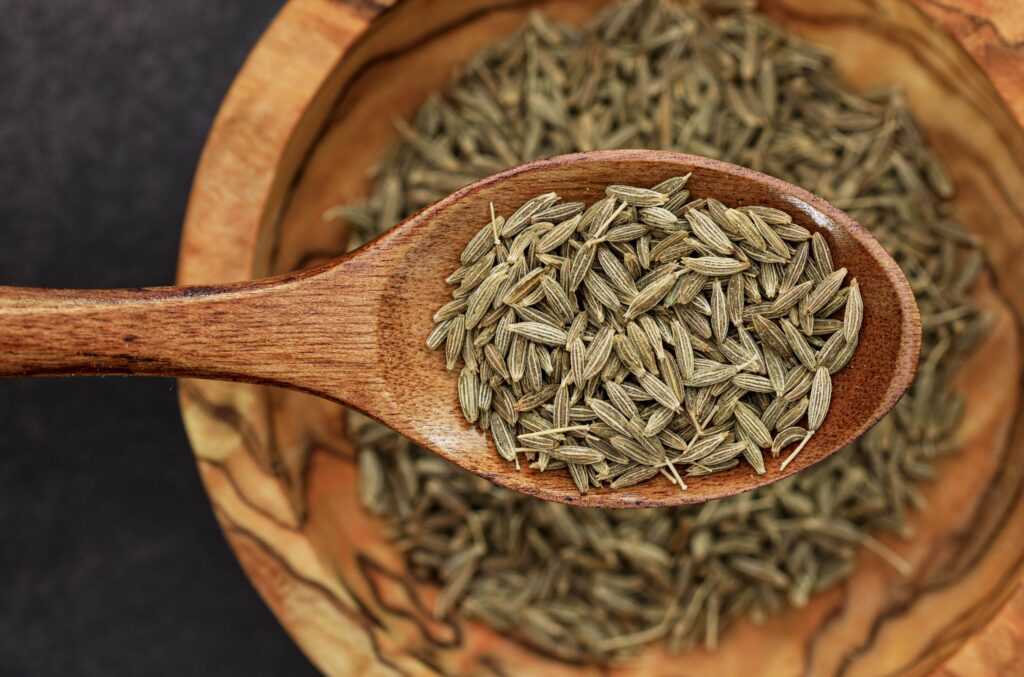
There’s a little bowl of them by the door at every Indian restaurant — those pale green and candy-coated seeds you take a pinch of on the way out, half out of habit, half because everyone else does. Fennel. You’ve probably been chewing them for years as a breath-freshener without ever wondering why they ended up there, specifically, at the end of a heavy meal. It turns out that placement is no accident. It’s one of the oldest pieces of after-dinner wisdom there is.
And it holds up. Not as a miracle, but as a small, genuine, free thing you can do when a meal sits heavier than you’d like.
What chewing fennel actually does
Fennel belongs to a family of plants herbalists call carminatives — a lovely old word for “things that ease gas and settle the gut.” Its main oil, anethole, gently relaxes the smooth muscle of the digestive tract. That relaxation is the whole point: it lets trapped gas move and pass instead of sitting and pressing, and it eases the small spasms that make a full stomach feel tight and uncomfortable. Chewing also breaks the seeds open, which is what releases the oil — so the chewing isn’t just habit, it’s the mechanism.
So the after-dinner pinch is doing quietly what it always claimed to: helping a heavy meal move through with a little less bloat and discomfort behind it.
How to actually use them
Beautifully simple, and hard to get wrong:
- Chew about half a teaspoon of fennel seeds slowly after a meal — chewing thoroughly is what matters, not the amount.
- Plain or toasted both work; a light toasting deepens the flavour if the liquorice note isn’t for you.
- The candy-coated kind from the restaurant is the same seed with a sugar shell — fine as a treat, but the plain seeds are what you want as a habit.
If it’s specifically the bloat you’re chasing rather than general after-meal heaviness, the same seed steeped as a tea is the gentler, warmer version of this — worth its own look: fennel tea for bloating, and how to make it. And ginger works a similar kind of magic on a different part of the picture: what ginger does for the bloat that comes out of nowhere.
The honest limits
Said plainly: fennel is a pleasant, traditional digestive aid, not a treatment for anything. If your meals routinely leave you heavy, gassy, and uncomfortable no matter what you do, that’s worth understanding at the root rather than chasing seed by seed — the slower digestion of midlife has real, nameable causes: the digestion shift nobody connects to hormones. Fennel in food amounts is very well tolerated; only genuinely large medicinal doses come with cautions, and those aren’t what a post-dinner pinch involves.
Want to read the research yourself?
- Fennel (Foeniculum vulgare): a review of its traditional and digestive uses — BioMed Research International
- Fennel: uses, evidence, and safety — Mount Sinai health library
There’s something quietly satisfying about learning that a tiny ritual you’ve done for years, without thinking, was right all along — and knowing exactly why. The bowl by the door wasn’t decoration. It was the last, small kindness of the meal.
When meals sit heavy and the afternoon drags, they often share a root — a gut running slow and an energy dip that arrives together. The free Energy Audit helps you see the pattern underneath, so you treat the cause instead of chasing each symptom on its own.