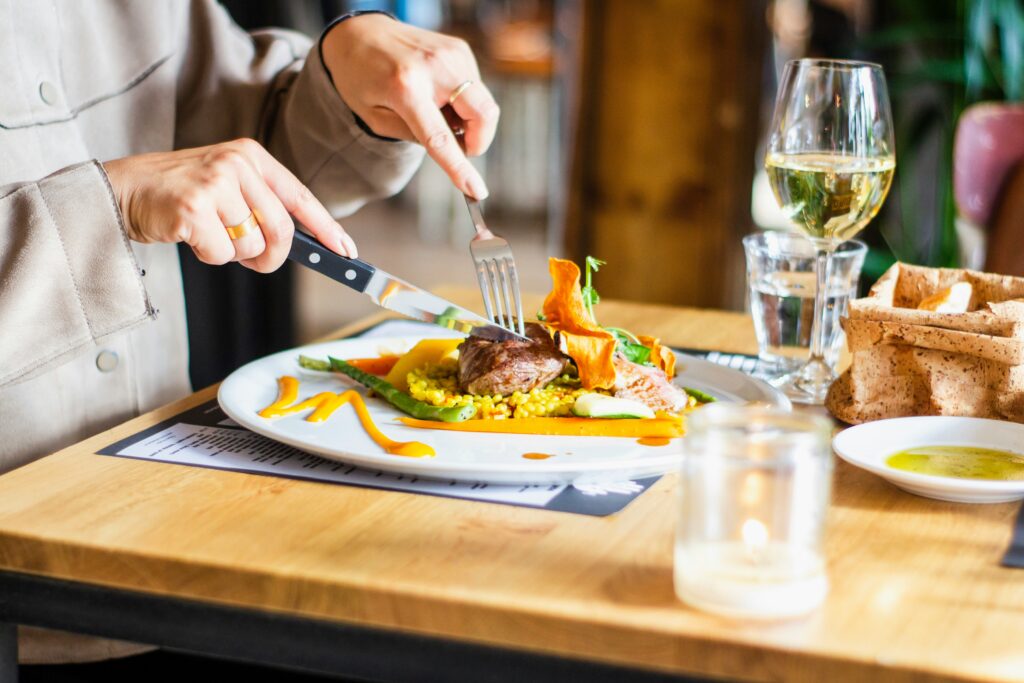
The connection between anti-inflammatory foods and joint pain is one of the best-supported ideas in nutritional research for women over 45 — but what the research actually shows is more specific than most dietary advice suggests.
Disclosure: This article contains no affiliate links. It’s information only, not medical advice — always check with your healthcare provider before making changes based on a joint condition.
Why Your Joints Started Talking to You After 45
Maybe you already have a version of this: a remedy your mother swore by, a warm drink or a routine you turned to whenever something in your body felt off. There’s real wisdom in that instinct — the body responds to being cared for. But when it’s your knees on the stairs, or your hands taking a few extra seconds to work in the morning, ‘care for yourself’ starts to feel vague. You want to know: does anything you eat actually reach the joint? Or is it just comfort?
It’s a fair question, and a common one. Somewhere in your 40s, joints that never asked for attention start asking for it daily — stiffness that takes longer to shake off in the morning, a knee that complains on stairs it never noticed before, hands that feel tight before they feel anything else. Nothing shows up as damage. Nothing shows up on an X-ray. But your body is clearly registering something.
You’re not imagining it, and you’re not “just getting older” in the dismissive way that phrase usually gets used. Something measurable is changing in your joint tissue during this decade — and food is one of a small number of things you have direct daily influence over while you figure out the rest.
It’s Not “Just Getting Older” — What That Explanation Leaves Out
Here’s the gap: when joint pain shows up in your 40s and 50s with no clear injury, the most common response — from friends, from the internet, sometimes from a rushed appointment — is that it’s simply wear and tear catching up with you. That explanation isn’t wrong, exactly. It’s just incomplete, and the missing piece matters for what you do next.
Estrogen isn’t only a reproductive hormone. It also functions as a natural anti-inflammatory buffer throughout the body, including in joint tissue. As estrogen declines through perimenopause and into menopause, that buffer thins. Research on what’s now being called the “musculoskeletal syndrome of menopause” describes a body that becomes more reactive — lower-grade inflammation that was previously absorbed without symptoms starts to register as stiffness, ache, and swelling. Collagen production also slows during this transition, which affects the tensile strength and flexibility of the tendons and connective tissue around each joint.
This is the Normal Gap in practice: your joints look structurally fine, but the internal environment around them has changed. That’s not something an X-ray is built to catch, and it’s not something willpower fixes. It’s also exactly the kind of change that responds — partially, not magically — to what you eat and how you move.
What Anti-Inflammatory Foods Can Actually Do for Joint Pain
This is the part worth taking seriously, because the research here is more solid than most wellness content gives it credit for — and more modest than most marketing claims.
Curcumin, the active compound in turmeric, has been studied directly against joint inflammation. In head-to-head trials for knee osteoarthritis, curcumin has shown pain-relief effects comparable to ibuprofen, with research pointing to it working by calming a specific inflammatory pathway (NF-κB) that drives swelling and cartilage breakdown at the cellular level. That’s a real, mechanistic effect — not a folk claim.
Omega-3 fatty acids, found in fatty fish, walnuts, and flaxseed, work on a related but separate pathway. They help shift the body’s inflammatory signaling toward resolution rather than escalation. Newer research combining curcumin and omega-3 together has found the pairing may work better than either alone for joint-specific pain and the underlying tissue stress that drives it — an encouraging early signal, though this is still emerging science rather than settled fact.
Beyond the two headline ingredients, a broader Mediterranean-style pattern — vegetables, olive oil, fatty fish, nuts, legumes, and a lower intake of processed and fried food — is the dietary approach with the most consistent research behind it for lowering whole-body inflammation, the kind that shows up as joint stiffness, brain fog, and low energy together rather than in isolation. If you’ve read our piece on silent inflammation after 50, this is the same underlying process wearing a different symptom.
None of this works like a painkiller. There’s no single dose that resolves a flare-up in an afternoon. What the research supports is a cumulative effect — weeks, not hours — from a consistently different pattern of eating, not a single “anti-inflammatory” ingredient added on top of an otherwise unchanged diet.
In practical terms, the foods with the most research behind them for this specific kind of joint discomfort are: fatty fish like salmon, mackerel, and sardines; turmeric with a source of fat and black pepper to help absorption; extra virgin olive oil in place of seed oils; walnuts and ground flaxseed; and a wide range of colourful vegetables. On the other side, the foods most consistently linked to higher inflammation markers are refined sugar, fried food, and highly processed snack food — not because any single serving matters, but because of what a pattern of regularly eating them does over months.
The Movement Piece Nobody Wants to Hear About
Food changes what’s happening inside the joint. Movement changes what’s happening around it — and the two work together, not separately.
Joints are partly nourished by motion itself: cartilage doesn’t have its own blood supply, so it relies on the compression and release of movement to draw in nutrients and clear waste. Staying still to “protect” a stiff joint often makes it stiffer. Gentle, consistent movement — walking, swimming, easy strength work, stretching — tends to outperform rest for the kind of low-grade, hormone-linked joint discomfort common in this decade. It doesn’t need to be intense to count. It needs to be regular.
This is also where stress belongs in the conversation. Chronic stress keeps cortisol elevated, and elevated cortisol interacts with the same inflammatory pathways involved in joint pain. We’ve written more about that connection in why stress feels worse now — it’s rarely just one factor working alone at this stage of life.
What Food Alone Won’t Fix
It won’t reverse structural joint damage that’s already occurred. It won’t replace medical evaluation if pain is sudden, severe, one-sided, or accompanied by swelling, redness, or warmth around a joint — those signs deserve a doctor’s attention, not a dietary experiment. It won’t work on a timeline of days; most people evaluating a dietary approach need 8 to 12 weeks of consistent change before judging whether it’s doing anything. And it’s not a substitute for the movement piece above.
If your joint pain is new, sudden, or worsening quickly, that’s a conversation for your doctor first. This article is about the slower, cumulative kind of joint discomfort that so many women in this decade describe and so few get a straight explanation for.
Is This Worth Trying for You, Right Now?
If your joint pain is the low-grade, comes-and-goes, worse-in-the-morning kind — and you’ve ruled out anything urgent with your doctor — an anti-inflammatory eating pattern is a low-risk, well-supported place to start. You’re not choosing between “do this” and “do nothing.” You’re choosing to add a pattern with real research behind it, on a realistic timeline, alongside movement rather than instead of it.
Either way, you’re allowed to want a straight answer instead of a sales pitch. That’s what this was.
Is There a Supplement That Addresses Joint Inflammation Directly?
The anti-inflammatory foods and movement approaches covered above work on the same biological pathways that joint support supplements target. For women who want to add a targeted supplement to what they’re already doing with food and movement, Advanced Joint Support is formulated specifically around the inflammation-and-cartilage mechanisms that affect joint health in midlife women.
It’s not a replacement for the dietary and movement foundations. It’s an addition for those who want to do more than food and movement alone can deliver in the timeframe they’re working with.
Advanced Joint Support — formulated for joint inflammation and cartilage health, 90-day guarantee →
Some of the links on this page are affiliate links. If you make a purchase through one, we may earn a small commission — at no extra cost to you. It’s how we’re able to keep researching and publishing free, accessible guidance for women who need it.
n
What You've Been Asking Us
Because food and supplements are addressing different things. Anti-inflammatory foods reduce the inflammatory load on the body and support the microbiome that modulates immune response. Supplements like glucosamine and boswellia are working at the level of joint tissue itself — providing structural building blocks and specifically inhibiting inflammatory pathways in cartilage. One is upstream; the other is at the site. For mild joint changes, dietary work alone can be sufficient. For more established joint issues, the two approaches address different layers of the same problem.
It has the most consistent research behind it for systemic inflammation, yes. But the research consistently shows that it’s the overall pattern that matters rather than any individual element. Olive oil is anti-inflammatory; a diet otherwise high in processed food with olive oil added is not. The diversity of plants (which supports the microbiome that regulates inflammatory response) tends to matter more than any single food within the pattern.
The evidence for nightshade avoidance and joint pain is very weak. The theory relates to alkaloids in nightshade vegetables irritating the gut in susceptible individuals, but the clinical research supporting this for joint pain specifically is limited to anecdote and small studies. Individual variation exists — some people with gut permeability issues may find nightshade reduction helpful. For most people, the benefit of the vegetables themselves (tomatoes, peppers, potatoes are all nutritionally dense) likely outweighs any theoretical alkaloid concern.
Six to twelve weeks is a realistic timeline for noticing a meaningful shift via dietary change alone. The inflammatory process takes time to downregulate as the dietary pattern changes, and the microbiome shifts that support that process take their own time. Joint tissue changes even slower. Dietary anti-inflammatory work is cumulative and consistent — the benefit compounds over months rather than arriving in weeks.
Understand your pattern before trying anything
The Energy Detective Guide walks you through the five exhaustion patterns most common in women over 45 — so what you try next is pointed at the right mechanism, not just the most popular supplement.
→ Get the Free Energy Detective Guide