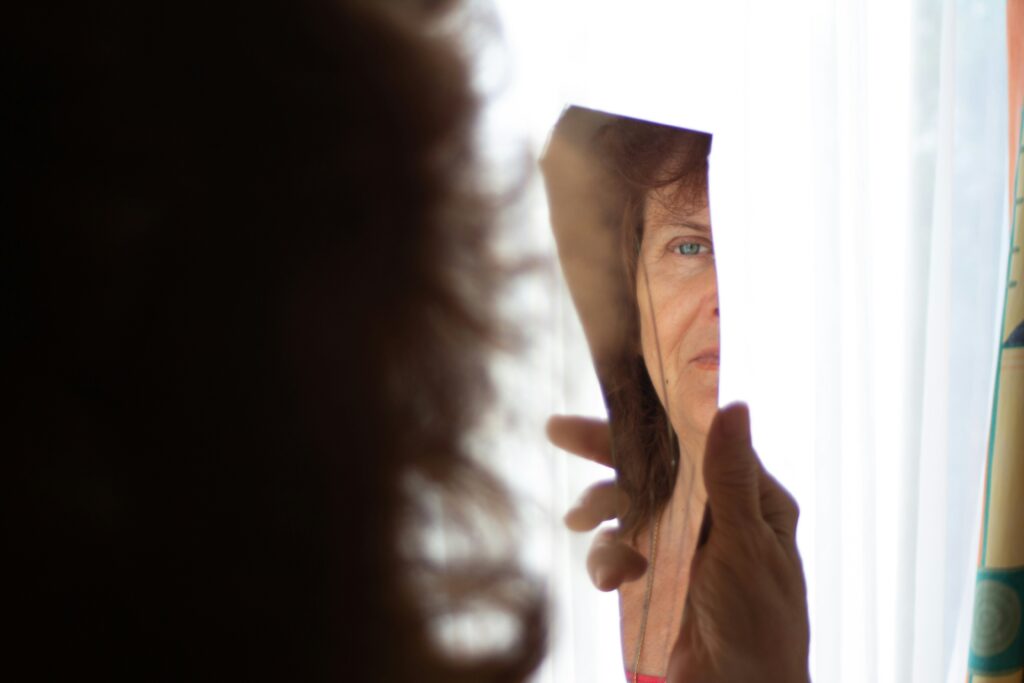
you noticed it in the mirror first.
Not a sudden change — nothing that dramatic. More like a slow accumulation of small things she couldn’t quite point to. The skin that used to bounce back and now just settled. The joints that had started their morning stiffness announcements. The hair that came out on the brush in amounts she’d started noting.
You mentioned it to your doctor at the annual appointment. Got back: entirely normal for her age.
***
Normal for her age. The phrase that both answers and doesn’t answer anything.
Yes, these things change with age and hormonal shift. That is accurate. What the phrase doesn’t cover is why they change simultaneously, why they all belong to the same underlying story, and what — if anything — can be done about the rate at which they change.
The answer is that skin elasticity, joint cushioning, hair structure, and bone strength are all substantially collagen-dependent. And collagen production falls off a cliff after 40 — declining by roughly 1-1.5% per year, accelerating in the years around menopause when estrogen (which directly stimulates collagen synthesis) starts its own decline.
***
The mirror and the brush and the morning joints were telling her the same thing from different angles.
Not: this is what getting older looks like and there is nothing to be done about it.
But: this is what declining collagen production looks like. And collagen production is a specific, measurable process with specific, researchable inputs.
***
The research on collagen supplementation has grown substantially in the past decade. Not the marketing version — the peer-reviewed version. The trials on skin elasticity, joint function, and bone density markers. The evidence on which forms of collagen peptide produce the most measurable response, and in whom.
The detail on what the research actually shows — and why most collagen supplements are underdosed relative to what the trials use — is here: Bone Density After Menopause: What the Research Says About Supplements
Related reading: The Turmeric Drawer · Why the Turmeric Most Women Try Doesn’t Help Much with Joint Pain
Understand your pattern before trying anything
The Energy Detective Guide walks you through the five exhaustion patterns most common in women over 45 — so what you try next is pointed at the right mechanism, not just the most popular supplement.
→ Get the Free Energy Detective Guide