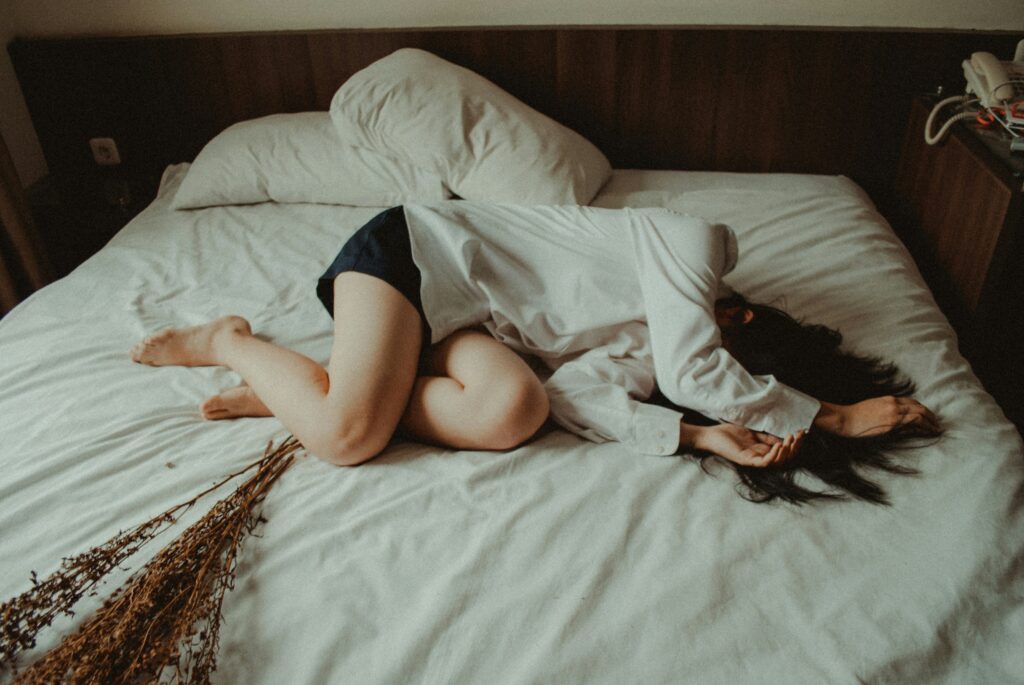
Why Sleep Feels Different Now
If sleep feels less restorative than it used to — even on nights without a single hot flash — that’s not in your head. It shows up in the research, too.
It’s Not Just Hot Flashes
Most of the conversation around perimenopausal sleep focuses on night sweats, and they matter. But sleep architecture itself changes underneath that: less slow-wave (deep) sleep, more fragmented REM. Part of the reason is progesterone, which the body converts into a compound called allopregnanolone — one of the brain’s natural calming signals. As progesterone declines, that calming effect declines with it, even on dry, sweat-free nights.
The 2am Wake-Up, Translated
Waking at a consistent hour isn’t random. Cortisol, the hormone that naturally rises to wake you in the morning, can start rising earlier in this stage of life — sometimes hours before you intend to get up. Add a blood sugar dip from an early dinner, and 2am stops being a coincidence.
What Actually Helps (The Honest Version)
The research-backed basics still do the most work: a consistent sleep and wake time, a genuinely cool room, easing off late caffeine and alcohol, and morning light to anchor your circadian rhythm. If disrupted sleep is constant rather than occasional, it’s worth a direct conversation with your doctor about a sleep evaluation or hormone therapy — not another sleep gummy.
Not Sure Which Pattern This Is?
The Energy Detective walks through five common patterns and helps you spot yours.