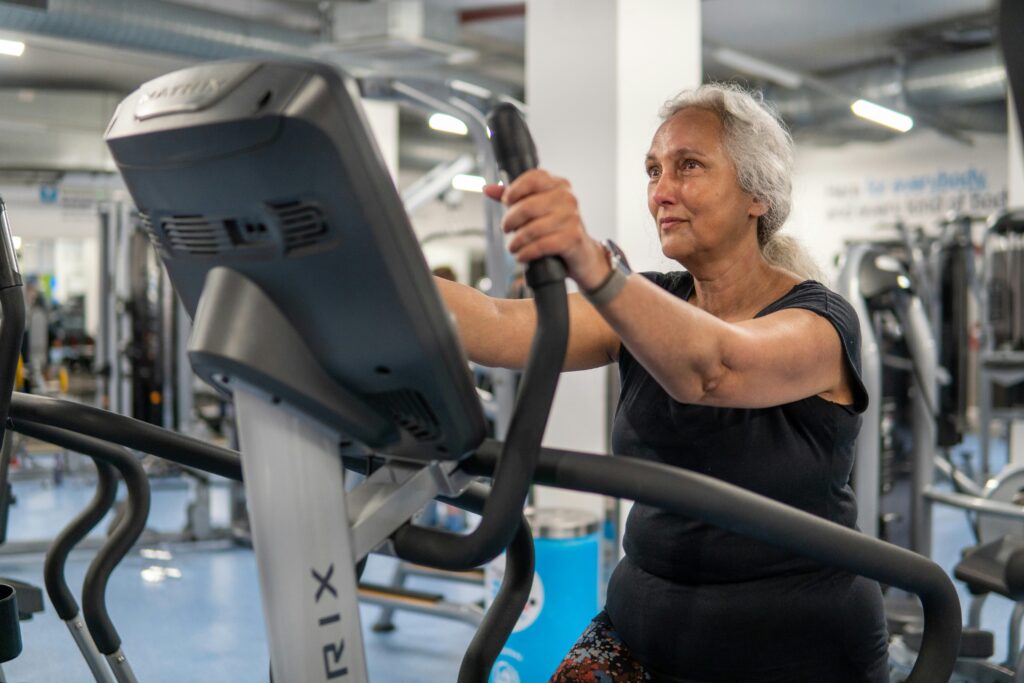
You know you’re supposed to exercise. You know it helps energy.
But you’re exhausted. Exercise feels impossible. You do it and crash.
Then you read “exercise boosts energy!” and feel guilty.
What rarely gets mentioned is: You’re probably exercising wrong for midlife.
Not too much. Wrong type.
You’re not broken. Your body isn’t failing you. But it HAS changed. And the exercise that worked at 35 isn’t the same exercise that works now. Let me show you why—and what to do about it.
The Problem: Exercise in Midlife Isn’t the Same as Exercise at 35
At 35:
- Your hormones buffer stress
- Your recovery is fast
- Exercise recovers quickly
- You feel energized
You remember that, right? When exercise just energized you.
At 50:
- You have less hormonal buffering
- Recovery is slower
- Intense exercise can increase cortisol (stress hormone)
- You can crash for days
Same exercise. Different impact. This is where you are now. And if you’re doing 35-year-old exercise, you’re crashing for 50-year-old reasons.
Here’s the shift in how to think about exercise at midlife: The goal isn’t to prove something to yourself. It’s to support your energy and your body as it is right now. This changes everything.
Your body isn’t the problem. The exercise TYPE is. Understanding this shift is the key to moving in a way that actually gives you energy instead of taking it away.
What Type of Exercise Actually Works in Midlife
Wrong approach: “If some exercise is good, intense exercise is better.”
Correct approach: “The exercise you’ll do consistently, that doesn’t make you more exhausted, is the best.”
These are the movement forms that work WITH your body, not against it. They’re what your midlife nervous system actually needs.

Tier 1: What Works Best in Midlife (Start Here)
Walking (especially morning walking)
- 15–45 minutes daily
- Gentle pace (you can talk while doing it)
- Morning preferred (resets cortisol rhythm)
- Energy impact: ENERGIZING (not depleting)
- Frequency: Daily
- Cost: Free
Gentle yoga or stretching
- 20–30 minutes, 3–4x/week
- Focus on restorative, not power
- Calms nervous system, improves flexibility
- Energy impact: CALMING/BALANCING
- Frequency: 3–4x weekly
- Cost: Free (YouTube) or $10–20/class
Swimming or water aerobics
- 20–30 minutes, 2–3x/week
- Low impact, supportive
- Energizing without being intense
- Energy impact: ENERGIZING
- Frequency: 2–3x weekly
- Cost: Pool access
Pilates or barre
- 30–45 minutes, 2–3x/week
- Low impact, controlled
- Builds lean muscle without high intensity
- Energy impact: NEUTRAL/SLIGHT ENERGIZING
- Frequency: 2–3x weekly
- Cost: $15–25/class
Notice the pattern? All of these energize or balance. None of them deplete. That’s the shift.
If you already do these and they’re working—meaning you don’t crash and your energy improves—keep going. This is about listening to your own body, not following rules.
Tier 2: Acceptable But Requires Balance
Moderate cardio (cycling, elliptical, brisk walking)
- 20–30 minutes, 1–2x/week
- Moderate intensity (slightly breathless but can talk)
- Can be energizing if not overdone
- Energy impact: POTENTIALLY DEPLETING if overdone
- Frequency: 1–2x weekly (not daily)
- Cost: Varies
Weight training (light)
- 20–30 minutes, 2x/week
- Light weights, controlled movements
- Preserves muscle without excessive cortisol
- Energy impact: NEUTRAL if proper recovery
- Frequency: 2x weekly (not daily)
- Cost: Varies
This is where most women get stuck. They’re doing intense exercise thinking it’s what ‘healthy’ means. But if it’s leaving you exhausted, it’s not working for you.
Tier 3: High-Intensity (Proceed With Caution)
Intense cardio (running, HIIT, CrossFit, spin classes)
- Can spike cortisol excessively
- Recovery takes longer
- Can leave you exhausted for days
- Energy impact: POTENTIALLY VERY DEPLETING
- Frequency: If doing this, 1x/week MAXIMUM
- Only if you sleep well, stress is low, and recovery is good
There’s a reason why intense exercise feels so exhausting right now. It’s not weakness. It’s chemistry. And once you understand it, you can stop fighting your body.
The tier system isn’t about limiting you. It’s about giving you permission to move in a way that actually works. Your body will tell you what’s right—just listen for energy, not exhaustion.
The Cortisol Factor: Why Intense Exercise Feels Like Stress (Because It Is)
This is why gentle movement is actually the SMART choice right now, not the weak one.” This is crucial:
Gentle exercise (walking, yoga, swimming) → Reduces cortisol
Intense exercise → Spikes cortisol (this is STRESS)
In midlife, you have less hormonal buffering for stress. Cortisol spikes hit harder.
If you’re already stressed, sleep-deprived, or dealing with hormonal changes, intense exercise is another stressor your body doesn’t need.
Gentle exercise gives you the benefit of movement without the stressor.
This spike is STRESS. Your body is treating intense exercise like a threat. At 35, your hormones buffered that. At 50, they don’t.
Your Week of Energy-Giving Movement

Monday: 30-minute walk (morning preferred)
Tuesday: Gentle yoga or stretching (20–30 min)
Wednesday: Walk or easy movement (20–30 min)
Thursday: Pilates, barre, or water aerobics (30 min)
Friday: Walk or rest
Saturday: Gentle yoga or restorative movement (30 min)
Sunday: Rest or gentle walk
Total weekly: 2.5–3 hours of movement
Intensity: Gentle. You should feel energized or calm, not depleted.
That’s it. Consistent, sustainable, energizing movement. No heroics. No crashing. Just steady energy building week after week. This is the secret that nobody talks about.
This might look low-intensity on Instagram. But this is what sustainable, energizing movement looks like for women your age. Follow this and watch your energy improve over 4 weeks.
The Signs You’ve Found Your Groove (And When You Haven’t)
Your body will tell you if you’re on the right track. Here’s what to listen for.

Signs your exercise is working:
- You feel energized or calm after (not crashed)
- You recover within hours (not days)
- You sleep better
- Your energy overall improves
- Stress level is lower
- You actually want to do it (not dreading it)
If you’re seeing these signs, you’ve cracked the code. You’re exercising in a way that actually works for midlife. Stick with it.
Signs your exercise is too intense:
- You’re exhausted for hours after
- Recovery takes days
- You need a nap after (not just rest)
- You feel more stressed
- Sleep is disrupted
- You’re dreading workouts
If this is you, you’re not failing. You’re just exercising like a 35-year-old. Your body is telling you to change the approach. Exercise is stressing your system. Reduce intensity.
Your body is the ultimate expert. Stop listening to fitness trends and listen to what your body is actually telling you. If it’s crashing, it’s not right. If it’s energizing, you’ve found your groove.
Muscle Maintenance (Without Intense Exercise)
“You lose muscle in midlife—that’s inevitable. But you don’t have to accept it quietly. Here’s how to maintain strength without the cortisol crash.
But you don’t lose it as fast if you use your muscles regularly.
Gentle muscle engagement:
- Walking (engages legs)
- Yoga (engages entire body, weight-bearing)
- Pilates (engages core and stabilizers)
- Barre (engages muscles with lighter load)
- Swimming (engages entire body with support)
This isn’t ‘settling for less.’ This is smart maintenance. You’re keeping your strength while protecting your energy. That’s the trade-off that actually works. This maintains muscle without the cortisol spike of intense training. Not optimal for building muscle, but good for maintenance.
If building muscle matters to you, it’s absolutely possible. Just do it smart: light weights 2x/week, with good sleep and nutrition. Still manageable. Still sustainable
Muscle maintenance through gentle, consistent movement is completely achievable. You’re not losing muscle; you’re losing the capacity (or the desire) to destroy your system chasing it. That’s growth, not loss.
The Real Truth About Midlife Fitness
The fitness industry tells you: “More is better. Intensity is king. No pain, no gain.”
That’s optimized for 25-year-olds.
For 50-year-olds, the opposite is true: Consistency beats intensity. Sustainable beats heroic. Energizing beats depleting.
The best exercise is the one you’ll do, that doesn’t make you more exhausted.
For most women in midlife, that’s gentle, consistent, sustainable movement.
Not Instagram-worthy. But it works.
Understand your pattern before trying anything
The Energy Detective Guide walks you through the five exhaustion patterns most common in women over 45 — so what you try next is pointed at the right mechanism, not just the most popular supplement.
→ Get the Free Energy Detective Guide