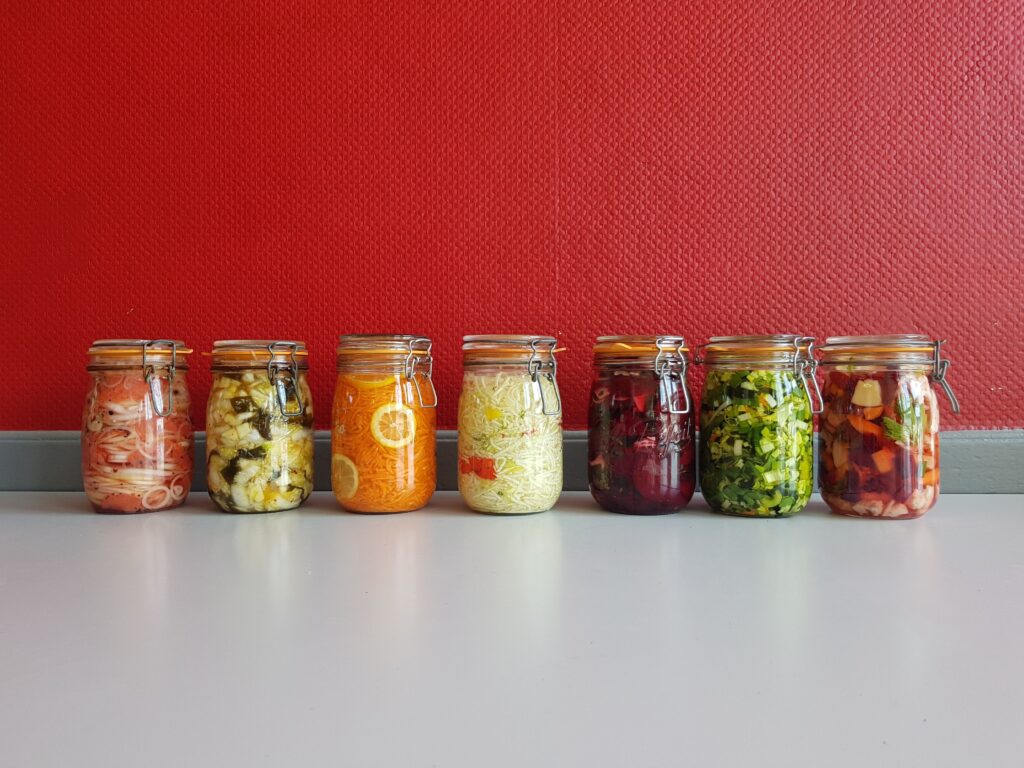
There’s a jar at the back of the fridge that’s better for you than most of what’s on the supplement shelf, and you probably already own a version of it. Yoghurt. A tub of kimchi someone talked you into. Sauerkraut, kept for hot dogs and otherwise ignored. These aren’t health-store novelties — they’re some of the oldest foods there are, and they’ve been quietly doing something your gut has always needed.
The surprise isn’t that fermented foods are good for you. It’s how small and ordinary the useful habit actually is — and how easy it is to get almost right and miss the point.
What the living foods actually do
Fermented foods carry live bacteria — the friendly kind — straight into your gut, along with the byproducts of fermentation that seem to help calm things down in there. In plain terms: a regular spoonful adds to the mix of microbes your digestion depends on, and a more varied mix tends to mean a gut that’s steadier, less prone to the bloating and unpredictability that creep in with midlife. You’re not taking a pill. You’re feeding an ecosystem you carry with you.
And it doesn’t take much. A few spoonfuls most days does more than a heroic effort once a month — this is a small, steady habit, not a cleanse.
The detail that decides if it counts
Here’s the catch most people miss: the bacteria have to actually be alive. The bright shelf-stable sauerkraut in the middle aisle has usually been pasteurised — heated for shelf life, which kills the very thing you’re eating it for. The jars that count are the ones kept cold, often labelled “raw” or “live,” or the yoghurt that says “live active cultures.” And if you cook fermented food hard, you cook the benefit out of it, so add the kraut or kimchi at the end, or eat the yoghurt as it is.
It’s a small piece of label-reading that turns a nice idea into a habit that actually reaches your gut.
Honest limits
Said straight: fermented foods are a gentle, worthwhile everyday support, not a treatment. If you’re new to them, start small — a large serving overnight can leave you gassier before it leaves you better, while your gut adjusts. And if your digestion has been genuinely off — persistent bloating, real discomfort, changes that worry you — a jar of kimchi isn’t the answer to that, and it’s worth looking properly at what’s going on: what might actually be behind bloating all the time. For the deeper repair work a struggling gut sometimes needs, there’s a fuller picture too: what gut-lining repair actually takes.
Want to read the research yourself?
Check it for yourself — the science here is genuinely interesting:
- Fermented foods, the gut microbiome, and markers of inflammation — Stanford study, Cell (2021)
- Why your gut health reaches further than digestion — Johns Hopkins Medicine
There’s something grounding about it — that one of the better things you can do for your gut is old, cheap, and already in the fridge. No regimen, no shopping list you’ll abandon by Thursday. Just a spoonful of something alive, most days, feeding the part of you that quietly runs so much of how you feel.
When the gut is off, it rarely stays in the gut — it shows up as fatigue, mood, and foggy afternoons too. The free Energy Audit helps you see how it all connects, so you can start with the thread that actually runs through your days.