
Part 4 of the Beyond the hype Series
You finally worked up the courage to tell your doctor how terrible you’ve been feeling.
The weight gain despite eating less. The rage that appears out of nowhere over something trivial—your husband chewing too loudly, a coworker’s email tone, traffic that normally wouldn’t bother you. The afternoons when you need to lie down or you might cry, even though nothing specific happened.
She listened. She ordered blood work. Your FSH (follicle-stimulating hormone—the marker doctors use to track menopause transition) came back elevated. Your estrogen was fluctuating.
She nodded sympathetically and said, “Your hormones are normal for perimenopause. This is just what happens during this phase of life.”
That moment when “normal” feels less like validation and more like abandonment. Like being told your suffering has a name but no solution. Like the answer is: learn to live with it.
Here’s what that appointment didn’t include: the research published in the last 15 years on natural perimenopause support. Not because your doctor is incompetent or doesn’t care—she does. But because there’s a 17-to-20-year average gap between peer-reviewed research publication and standard medical practice. And perimenopause research is stuck somewhere in that gap.
By the end of this article, you’ll understand why recent research never makes it to routine medical appointments, which symptoms you didn’t realize were hormonal, what studies actually show about natural support, and how to have a productive conversation with your doctor that doesn’t end with “just deal with it.”
What we won’t repeat here: The complete supplement science — that’s already covered in The Energy Solution Nobody Told You About. If you’re curious about timing, you’ll find it in Why Your Supplements Might Be Making You More Tired. And for quality checks, we’ve explained those in Why Women Over 50 Don’t Trust Supplements.
Here, the spotlight is on something different: what your doctor hasn’t seen, and why that matters.
The 17-Year Research Gap (And Why Your Doctor Isn’t Ignoring You)
Here’s how medical research reaches your doctor’s appointment room:

Year 0: Study published in peer-reviewed journal
Year 5-8: Additional studies replicate findings
Year 10-12: Meta-analyses (studies of studies) get published
Year 15-17: Findings appear in updated medical textbooks
Year 17-20: Becomes standard practice taught in continuing education
The timeline problem: Research published in 2010 might reach standard general practice in 2027-2030.
Your doctor—whether she graduated last year or twenty years ago—learned about perimenopause from curriculum that reflects research from the 1990s and early 2000s. Medical school teaches what’s already established, not what’s emerging.
What medical training covers thoroughly:
- When to prescribe HRT (hormone replacement therapy)
- How to test for menopause (FSH levels, menstrual patterns)
- Ruling out thyroid disease, anemia, depression
- Pharmaceutical interventions for specific symptoms
What doesn’t make it into standard curriculum:
- Perimenopause as distinct from menopause (it’s a 5-10 year transition, not a single event)
- Natural support options backed by recent research
- Botanical medicine studies (adaptogens, herbs, targeted nutrition)
- Subclinical hormone optimization (when numbers are “normal” but symptoms are debilitating)
Why the gap exists: Medical education focuses on disease treatment and pharmaceutical options. There’s no pharmaceutical company funding continuing medical education courses on moringa or magnesium. No drug rep visiting your doctor’s office with studies on black cohosh. The research exists in specialty journals—but it’s invisible to standard practice.
The time constraint is real: Your doctor sees 25-30 patients daily. Between appointments, she’s reviewing labs, calling in prescriptions, answering patient portal messages, documenting everything for insurance and legal compliance, and trying to stay current on treatments for life-threatening conditions—cancer, heart disease, diabetes.
She doesn’t have four hours weekly to read emerging research on adaptogens for perimenopausal mood swings. That’s not negligence. That’s the reality of modern medical practice.
The validation you need: Your doctor is brilliant at what she was trained to do—diagnose disease, prescribe pharmaceuticals when medically necessary, manage acute conditions, save lives.
She’s less equipped for optimizing quality of life during hormonal transitions using evidence-based natural interventions. Not because she’s incompetent. Because the system wasn’t designed to train her in this.
This is a curriculum gap, not a competence gap.
The Symptoms She Might Not Connect to Perimenopause
Your doctor knows the classic triad: hot flashes, night sweats, irregular periods.
If you walk in reporting those, diagnosis is straightforward. You’re perimenopausal, here’s what we can do about it.
But perimenopause has approximately 47 documented symptoms. Most women present with the other 44—symptoms that get diagnosed as separate conditions instead of connected to the single root cause of wildly fluctuating estrogen and progesterone.

Cognitive symptoms that often get diagnosed as early dementia or adult ADHD:
You forget words mid-sentence. Not occasionally—constantly. You walk into rooms and have no idea why you’re there. You read the same paragraph four times without comprehending it. You lose track of conversations while people are still talking. You can’t focus on complex tasks that used to be easy.
Your doctor might order cognitive testing or refer you to neurology. She might not ask about your menstrual cycle or hormone patterns.
Mood symptoms that often get diagnosed as depression or generalized anxiety:
Rage that comes from absolutely nowhere—not like you, not your personality, completely disproportionate to the trigger. Crying at commercials you’d normally find mildly touching. Anxiety about things that never bothered you before (driving, social situations, minor decisions). Feeling nothing—complete emotional flatness where you used to feel joy, interest, connection. Irritability at sounds, lights, people existing near you.
Your doctor might prescribe antidepressants or anti-anxiety medication. Both might help somewhat. But if the root cause is hormonal chaos, treating it as primary mental illness misses the bigger picture.
Physical symptoms that often get sent to specialists:
Joint pain, especially morning stiffness that improves as the day goes on (sent to rheumatology). Heart palpitations that feel alarming but tests show nothing wrong (sent to cardiology). Tingling or numbness in hands and feet (sent to neurology). Burning tongue syndrome that makes eating uncomfortable. Electric shock sensations in your head that are brief but disturbing.
Each symptom gets evaluated in isolation. Each specialist rules out their specific diseases. Nobody connects them to estrogen fluctuations.
Metabolic symptoms that often get blamed on poor willpower:
Weight gain despite eating the same or less than before. Specifically belly fat accumulation that seems immune to diet and exercise. Insatiable hunger one week, complete loss of appetite the next. Blood sugar crashes after meals you’ve eaten for years without problems. Sugar cravings that feel like withdrawal, not just preference.
Your doctor might suggest Weight Watchers or a dietitian. She might check for diabetes. She might not consider that estrogen directly affects insulin sensitivity—when estrogen fluctuates dramatically, blood sugar regulation goes haywire along with it.
Sleep symptoms that often get treated with sleep aids:
Can’t fall asleep despite bone-deep exhaustion. Wake at 3 AM like someone flipped a switch, can’t return to sleep no matter what you try. Sleep eight hours and wake feeling like you didn’t sleep at all. Vivid, disturbing dreams every single night that leave you exhausted.
Your doctor might prescribe Ambien or trazodone. These might help you sleep. But if the underlying cause is hormone-driven sleep architecture disruption, medication masks the symptom without addressing the cause.
The pattern your doctor might miss:
- If you present primarily with depression symptoms, she treats depression.
- If you present primarily with joint pain, she refers to rheumatology.
- If you present primarily with insomnia, she prescribes sleep medication.
All treated as separate, unrelated problems. The single underlying cause—dramatic estrogen and progesterone fluctuations during the perimenopausal transition—never gets connected to the constellation of symptoms.
The recognition moment that changes everything:
If you’re between 45 and 55 years old and you have five or more symptoms from this list, this is almost certainly perimenopause—even if your doctor didn’t make the connection. Even if your FSH and estrogen levels came back “normal for your age.” Even if you’re still having regular periods. Even if you don’t have a single hot flash.
Once you recognize the pattern, you know what you’re actually dealing with. And that changes which solutions make sense to try.
The Research Published After Medical School
Here’s what studies published in the last 15 years actually show about natural support for perimenopause symptoms. This isn’t fringe wellness blogger territory—these are peer-reviewed studies in journals like Menopause, Climacteric, and Journal of Women’s Health.
Your doctor hasn’t seen most of this research because it was published after her training, doesn’t appear in pharmaceutical-funded continuing education, and isn’t covered in the medical journals she has time to read while managing a full patient load.
Black Cohosh for Hot Flashes and Night Sweats
What doctors learned in medical school: Mixed evidence, unclear whether it works, mechanism unknown.
What research from 2015-2024 shows: Black cohosh reduces hot flash frequency by an average of 26% in women aged 45-55.
Not everyone responds (there seem to be “responders” and “non-responders”), but for women who do respond, effects are noticeable within 6-8 weeks. Studies up to 12 months show no serious side effects.
The key word is “average”—some women see 40-50% reduction, some see nothing. You won’t know which group you’re in until you try it for 8 weeks.

The clarity that’s new: Earlier studies were inconsistent because they used different black cohosh preparations, different doses, and didn’t separate responders from non-responders. Recent meta-analyses (studies that combine data from multiple studies) provide much clearer guidance on dosing, timing, and realistic expectations.
Omega-3 for Perimenopausal Mood Symptoms

What was known: General anti-inflammatory effects, “might help” with mood.
What studies from 2012-2023 show: EPA (eicosapentaenoic acid—one specific type of omega-3) at 1-2 grams daily reduces depression scores in perimenopausal women specifically. Not just “people with depression”—perimenopausal women experiencing hormone-related mood disruption.
Takes 6-8 weeks to see effects. Works alongside therapy or medication if those are needed—not instead of them.
The specificity that’s new: Not just “omega-3” in general. EPA specifically, not DHA (the other main omega-3). The dose matters (1-2g, not 300mg). And the population matters (perimenopausal women, not general population). This level of detail came from research published between 2012 and 2023.
Magnesium for Sleep Architecture
What was known: “Magnesium might help you sleep.”
What research from 2010-2022 shows: Magnesium glycinate (the specific form matters) at 300-400mg taken 1-2 hours before bed improves sleep quality in perimenopausal women.
Not just total sleep time—actual sleep architecture, meaning more time in deep, restorative sleep stages.
Works within 1-2 weeks for most women who respond to it. Doesn’t work for everyone, but response rate is high enough that it’s worth trying.
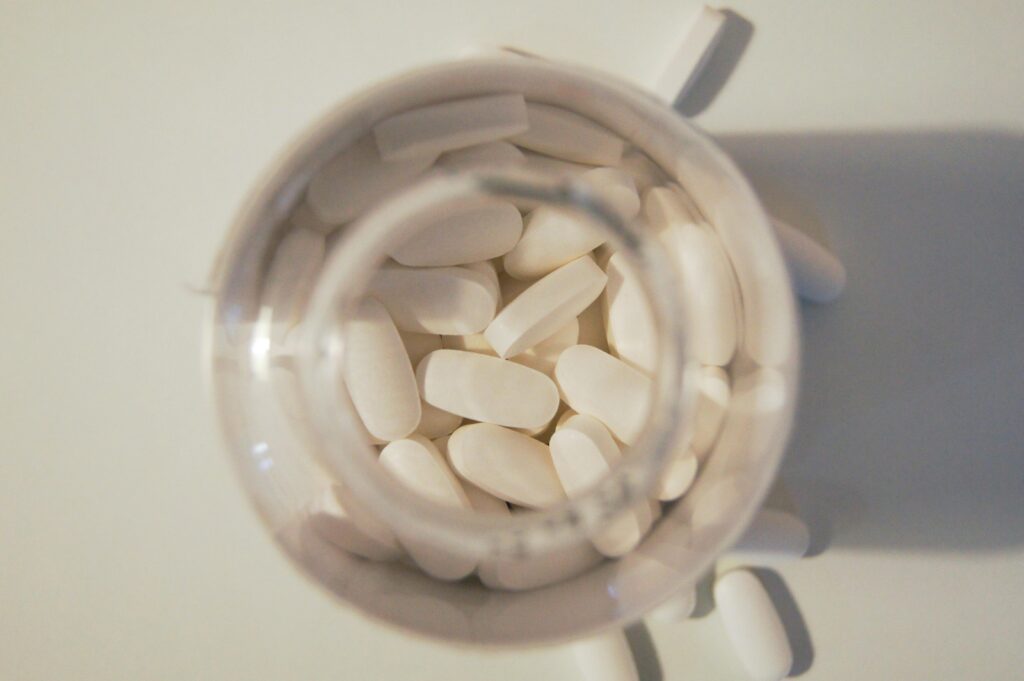
The form specificity that’s new: Not all magnesium is the same. Magnesium oxide (cheapest, most common) is poorly absorbed and mostly just causes diarrhea. Magnesium glycinate is well-absorbed and has calming properties. This distinction is recent—your doctor probably learned “magnesium” as one thing, not as a category with wildly different forms.
Vitamin D Optimization During Hormone Transition

What was known: Vitamin D is important for bone health and immune function.
What research from 2015-2024 shows: Low vitamin D correlates with worse perimenopausal mood symptoms (anxiety, depression, mood swings). Optimal range during perimenopause appears to be 50-70 ng/mL—higher than the general population recommendation of 30-40 ng/mL.
Takes 8-12 weeks of supplementation at appropriate doses to see mood-related effects. Bone health effects take longer.
What’s new: The optimal range for this specific population (perimenopausal women) is higher than general recommendations. And the connection to mood during hormonal transition is recent research that hasn’t filtered into standard practice yet.
Why this matters: These aren’t alternative medicine theories. These are peer-reviewed studies showing modest but meaningful effects—typically 20-30% symptom reduction.
Not 100% elimination. Not as powerful as HRT for severe symptoms. But for women with moderate symptoms, a 20-30% reduction can be the difference between functional and miserable.
And your doctor doesn’t mention any of this—not because she’s dismissing it, but because she genuinely hasn’t encountered this research in her training or continuing education.
The research exists. It’s just invisible to standard practice.
For complete supplement mechanisms and how they work → The Energy Solution Nobody Told You About
When Natural Support Makes Sense (And When It Doesn’t)
Natural support isn’t right for everyone. It’s not “better” than medical treatment—it’s an option worth considering in specific situations.
Natural support makes sense when:
✓ Your symptoms are moderate—disruptive but you’re still functional
✓ You’re in early perimenopause (symptoms just starting, probably 5-8 years from menopause)
✓ You want to try natural approaches before considering Hormone Replacement Therapy (HRT) (personal preference, completely valid)
✓ You can’t take HRT due to medical history (breast cancer, blood clotting disorders, stroke risk)
✓ You’re on HRT but it doesn’t cover everything (mood, energy, or gut issues persist despite hormone therapy)
✓ You’re willing to commit to 8-12 weeks and track your symptoms carefully
Skip straight to medical intervention when:
❌ Symptoms are severe—you can’t work, can’t function in daily life, having suicidal thoughts
❌ Heavy bleeding—soaking through a pad or tampon per hour, passing clots larger than a quarter
❌ Debilitating hot flashes—multiple per hour, can’t sleep for weeks straight
❌ Chronic insomnia—sleeping 3-4 hours nightly for extended periods despite trying everything
❌ Rapid unexplained weight gain—20+ pounds in three months with no diet or activity changes
❌ Depression with complete loss of interest in everything, inability to feel pleasure
If you’re in this severe category, natural support won’t be sufficient. Hormone Replacement Therapy (HRT) or other medical intervention is appropriate and necessary. Don’t suffer trying to “be natural” when you need actual medical treatment.
The “try natural first” timeline:
Month 1: Start targeted natural support based on your primary symptoms. Track daily—write down what you’re taking, how you feel, which symptoms improve or worsen.
Month 3: Reassess with your doctor. Are you better, same, or worse?
If better: Continue monitoring. Natural support is working for you.
If same or worse: Time for the Hormone Replacement Therapy (HRT) conversation. You gave it a fair trial. Now you need something more powerful.
This doesn’t mean natural and medical are opposed:
Many women use both. Hormone Replacement Therapy (HRT) for severe hot flashes plus magnesium for sleep. HRT for bone protection plus omega-3 for mood. HRT for the hormone piece plus moringa for blood sugar-related energy crashes.
They work through different mechanisms. Using both isn’t cheating or contradictory—it’s comprehensive.
Don’t suffer to prove you can handle things “naturally.” If you need medical intervention, use it. No shame, no failure, no judgment. Just use what works.
The Products That Meet Research Standards
A note on recommendations: Some of the links on this page are affiliate links. If you make a purchase through one, we may earn a small commission — at no extra cost to you. It’s how we’re able to keep researching and publishing free, accessible guidance for women who need it.
We only recommend products that meet the quality standards outlined here and here
Brief mentions here. For complete mechanisms, timing protocols, and quality markers, see the linked articles.
Brain Fog After 45 for the research
Imagine your brain working fast enough to finish sentences without forgetting what you were saying mid-thought. Your body temperature staying relatively stable instead of freezing one hour and sweating the next. Having enough mental energy to have an opinion about dinner instead of just existing in fog.
That’s what thyroid support during perimenopause can help with—not for everyone, but specifically for women whose thyroid function is struggling alongside hormone fluctuations.
Many perimenopausal women have what’s called subclinical hypothyroidism—thyroid function that’s declining but not bad enough for medication. TSH (thyroid stimulating hormone) between 2.5 and 4.5 is “normal” according to standard lab ranges, but many women in this range are symptomatic: exhausted, cold, foggy, losing hair.
Estrogen fluctuations directly affect thyroid hormone production and conversion. When estrogen drops and spikes erratically during perimenopause, thyroid function often struggles to keep up.
Research backing: L-tyrosine is the amino acid building block your thyroid uses to produce T3 and T4 (the active thyroid hormones your cells actually use). Bovine thyroid glandular provides additional thyroid tissue support. Studies show these support natural thyroid function in women with borderline-low thyroid activity.
combines both ingredients at research-supported levels.
Moringa Magic: For Energy Crashes and Blood Sugar Chaos
Imagine making it to 3 PM without that crushing wall of exhaustion. Your blood sugar staying stable enough that lunch doesn’t trigger a mandatory two-hour crash. The afternoon not feeling like you’re moving through quicksand while everyone else functions normally.
That’s what blood sugar stabilization looks like during perimenopause.
Estrogen directly affects insulin sensitivity—how well your cells respond to insulin and take up glucose from your bloodstream. When estrogen fluctuates wildly during perimenopause, insulin sensitivity swings along with it. Blood sugar spikes higher, crashes harder, and your energy follows the rollercoaster.
Research backing: Moringa leaf powder shows blood sugar stabilization effects in multiple clinical studies at doses of 1,500-3,000mg daily. It also provides broad-spectrum micronutrients (vitamins, minerals, amino acids) that are often depleted during perimenopause.
Moringa Magic delivers research-backed dosing in 500mg capsules (take 3-6 daily to hit the effective range).
Advanced Amino Formula: For Gut-Hormone Connection
Imagine eating a meal without spending the next two hours wondering what it’s going to do to you. No bloating that makes your pants uncomfortably tight by afternoon. No unpredictable bathroom urgency. No food sensitivities that seem to multiply every month while you’re also dealing with hot flashes and mood swings.
Estrogen affects gut lining integrity—the tight junctions between cells that keep food particles where they belong (in your intestines, not leaking into your bloodstream).
When estrogen drops during perimenopause, gut lining breaks down faster than it repairs itself. Food particles leak through (this is what people call “leaky gut” or intestinal permeability). Your immune system reacts to these particles. Inflammation increases. Food sensitivities multiply.
Research backing: L-glutamine at 5 grams daily is the most-studied intervention for intestinal permeability repair. Your gut lining cells use glutamine as their primary fuel source. Complete essential amino acid profiles support the tissue regeneration needed to actually rebuild damaged gut lining.
Advanced Amino Formula provides therapeutic doses: 5g L-glutamine per serving plus complete essential amino acid profile.
How to Talk to Your Doctor About Natural Support
This is the section you won’t find in other articles—the actual conversation framework that works.
Most women either avoid bringing up supplements entirely (afraid their doctor will think they’re difficult or uninformed) or bring it up defensively (which triggers pushback).
Here’s the approach that usually leads to productive partnership:

Opening:
“I’ve been tracking my symptoms carefully for the past three months. I’d like to try evidence-based natural support while we monitor results together. Can we partner on this approach?”
What this achieves:
- Shows you’re informed and systematic (tracking data)
- Invites collaboration, not conflict
- Makes clear you want her involvement, not to go rogue
- Uses “evidence-based” language that doctors respond to
What to bring to the appointment:
- Printed symptom tracker showing three months of daily data—which symptoms, when they occurred, severity ratings, any patterns you notice
- Specific supplement list with exact names, doses, and forms—not “some herbs I read about,” but “magnesium glycinate, 400mg, taken at bedtime”
- 2-3 relevant research studies printed from PubMed or other peer-reviewed sources—not blog posts, actual studies
- Clear timeline proposal like “I’d like to try this protocol for three months, then we reassess together”
Sharing the research with your doctor:
❌ Don’t say: “I read online that magnesium cures everything…”
✅ Do say: “I found a 2022 meta-analysis in the journal Menopause showing magnesium glycinate improves sleep quality in perimenopausal women. Have you encountered this research?”
❌ Don’t say: “Doctors don’t know anything about natural medicine…”
✅ Do say: “I understand this might not be in standard curriculum. I’ve been researching recent studies and wanted to discuss trying this approach.”
Set up monitoring plan:
“Can we schedule a follow-up in three months? I’ll continue tracking symptoms daily. If there’s no improvement by then, I’m completely open to HRT or other medical options.”
What this achieves:
- Gives her a clear endpoint to evaluate results
- Shows you’re serious, not just avoiding medicine
- Keeps her involved as your doctor (not going around her)
- Demonstrates flexibility (willing to escalate if natural approach doesn’t work)
If she’s dismissive without engaging:
If she immediately says “supplements are all snake oil” without looking at the research you brought:
“I respect your concerns. Can you help me understand which specific studies contradict these findings? I want to make an informed decision based on all available evidence.”
This is respectful but firm. You’re asking her to engage with evidence, not just dismiss based on assumptions.
If she still won’t engage with evidence: That’s useful information. It might indicate you need a doctor who practices evidence-based medicine that includes evaluating all published research, not just pharmaceutical options.
You deserve a doctor who listens and engages with evidence, even if she ultimately disagrees with your approach.
The goal isn’t to convert her to believing supplements are magic:
You’re simply requesting:
- Her monitoring while you try a natural approach backed by published research
- Partnership in tracking whether it works for your body
- Agreement to escalate to medical intervention if it doesn’t work
That’s entirely reasonable. Most doctors, when approached this way, will agree to monitor your trial.
What “Normal for Perimenopause” Actually Means
When your doctor says your hormones are “normal for perimenopause,” here’s what she actually means:

She means:
- You don’t have a disease requiring immediate treatment
- Your numbers fall within the statistical range for women in the perimenopausal transition
- This is typical for this phase of life
She’s NOT saying:
- You should feel this terrible
- Nothing can help you
- You have to just accept this
- Your suffering isn’t real
The “normal” range problem:
“Normal” FSH for perimenopause is anywhere from 25 to 100+ mIU/mL (milli-international units per milliliter—the measurement unit for hormones).
That’s an enormous range. Someone with FSH of 30 feels completely different than someone with FSH of 90. Both are “normal for perimenopause.” One might manage well with natural support. The other might need HRT.
Similarly, estrogen fluctuates wildly during perimenopause—sometimes high, sometimes low, changing day to day. One blood test is a single snapshot of a single moment. It doesn’t capture the chaos happening over weeks and months.
The validation you need:
Your symptoms are real. Your suffering is legitimate. “Normal” test results don’t invalidate your experience or mean you’re out of options.
If your symptoms are moderate and you’re willing to try natural support for three months while tracking carefully, that’s worth doing—even if your hormones tested “normal.”
If your symptoms are severe, “normal” hormones don’t mean you don’t deserve medical intervention. HRT isn’t just for women with “abnormal” hormone levels. It’s for women whose quality of life is unacceptable.
“Normal for perimenopause” describes your lab values. It doesn’t prescribe your treatment options.
Top Questions from Our Community
Yes, always. Bring the actual supplement bottles to your appointment so she can see exact ingredients, doses, and forms. Check for potential interactions with any medications you’re taking. Most doctors won’t object to quality supplements if you’re transparent about what you’re taking and willing to monitor results. The goal is partnership. If your doctor is dismissive without reviewing actual evidence, that might indicate you need a doctor more open to integrative approaches.
Ask which specific research she’s referencing. Offer to share the peer-reviewed studies you’ve found. If she’s dismissive of published research without actually reading it or explaining which studies contradict it, that’s not evidence-based medicine—that’s bias. You deserve a doctor who evaluates evidence, even if she ultimately disagrees with your approach. Consider finding a doctor who practices truly evidence-based medicine.
Three to four months minimum. Most natural approaches take 8-12 weeks to show full effects. Set a clear endpoint: “I’ll try this protocol for three months, track symptoms every day, then reassess with my doctor.” If quality of life is still unacceptable after three months of consistent use, that’s your answer—time for the HRT conversation. Don’t keep trying indefinitely if it’s not working.
Usually yes, but verify with your doctor for your specific situation and health history. HRT plus magnesium for sleep, or HRT plus omega-3 for mood, or HRT plus moringa for blood sugar-related energy often work well together—they target different mechanisms. Many women find HRT handles hot flashes and bone protection while natural support addresses energy, gut, cognitive, or mood symptoms that HRT doesn’t fully cover.
Bring symptom tracking that shows patterns correlated with your menstrual cycle. If symptoms worsen in specific weeks of your cycle, that’s hormonal, not purely psychological. If you’re 45-55 with five or more symptoms from the list in this article, perimenopause is the likely common thread. Ask directly: “Could these symptoms be related to perimenopause? I’d like to explore that possibility before assuming primary depression.”
No single definitive test. Perimenopause is diagnosed based on symptom patterns plus age plus menstrual changes. FSH and estrogen blood tests show snapshots but hormones fluctuate wildly day-to-day during perimenopause, so one test doesn’t tell the whole story. Diagnosis is usually: age 45-55, menstrual irregularities or changes, characteristic symptoms. Blood tests mainly rule out other conditions like thyroid disease or anemia.
This is where natural support becomes your primary option for symptom management. Work with a functional medicine practitioner if possible—they typically have more training in non-hormonal interventions. Black cohosh, omega-3, magnesium, vitamin D, and lifestyle modifications (stress management, sleep hygiene, nutrition) become your main tools. Some women also explore compounded bioidentical hormones under specialist care, though these still carry some of the same contraindications as conventional HRT.
If you’re asking this question, try natural support first for three months. Track carefully. If quality of life is still unacceptable after giving natural approaches a fair trial, your symptoms are severe enough. You don’t need to be completely non-functional to deserve HRT. “Functional but miserable” is sufficient reason. HRT isn’t a last resort after everything else fails—it’s a legitimate medical intervention when your quality of life is unacceptable, period.
Closing Thoughts
Your doctor said your hormones are “normal for perimenopause.” She’s not wrong—by lab standards, they are.
But “normal for perimenopause” doesn’t mean “you have to feel this terrible with no other options.”

She doesn’t know about recent research on natural perimenopause support—not because she’s dismissing you or hasn’t done her job, but because there’s a 17-20 year gap between research publication and standard medical practice. Studies from 2010-2024 on black cohosh, omega-3, magnesium, vitamin D, and adaptogenic support for perimenopause symptoms simply haven’t reached routine medical appointments yet.
That doesn’t make the research invalid or fringe. It makes it invisible to standard practice because of how medical education and continuing education are structured.
If your symptoms are moderate, you’re willing to track carefully for three months, and you want to try evidence-based natural support before considering HRT—recent research suggests these approaches have legitimate backing:
- Thyroid support for cognitive fog, temperature dysregulation, and crushing fatigue → [Complete details in Article 2]
- Blood sugar stabilization for energy crashes and mood swings → [Mechanisms in Article 2, timing in Article 3]
- Gut lining repair for digestive issues worsened by hormone fluctuations → [Protocols in Article 3]
If symptoms are severe—you can’t function, you’re having suicidal thoughts, bleeding is heavy, hot flashes are debilitating—skip the natural support trial and go straight to the Hormone Replacement Therapy (HRT) conversation with your doctor. Don’t suffer trying to “be natural” when you need medical intervention.
But if you’re in that middle zone where you’re functional but miserable, where “normal” hormones don’t match how awful you feel—natural support backed by recent research might be the bridge between “technically normal lab values” and actually feeling like yourself again.
And bringing the research to your doctor, asking for partnership in monitoring a three-month trial, and being willing to escalate if it doesn’t work—that’s not being difficult. That’s being an informed advocate for your own health.
You deserve a doctor who will partner with you on that.
Continue Reading the Beyond the Hype Series:
- ← Previous: – Why Your Supplements Might Be Making You More Tired
- You’re here: The Perimenopause Research Your Doctor Hasn’t Seen
- → Next – The Supplement Industry’s Dirty Secret
Understand your pattern before trying anything
The Energy Detective Guide walks you through the five exhaustion patterns most common in women over 45 — so what you try next is pointed at the right mechanism, not just the most popular supplement.
→ Get the Free Energy Detective Guide